
In view of expanding to global electronics markets, the team at a leading Indian manufacturer was gearing up for a significant project: producing a series of high-reliability components for a new line of precise metering products. The stakes were high, and so was the pressure. They knew that even a small mistake or manufacturing error in the vacuum potting process could lead to severe failures in the field.
Vacuum potting is a specialized technique to achieve the highest quality and reliability in potted electronic assemblies. Normally, vacuum potting is done for the high voltage applications. However, given that electronic circuits are now getting smaller and smaller, so is the space available for potting compounds to enter the components. For over 30 years, Twin has gained immense expertise in handling a variety of vacuum potting applications. Learning from this experience, we have identified 5 common mistakes that many customers tend to overlook in vacuum potting.
This was known to the Indian manufacturer mentioned above, and thus, they approached Twin to proactively to resolve their challenges in vacuum potting.
Know Mistakes in Vacuum Potting
1. Avoid the smallest air bubbles. Make small changes in the design.
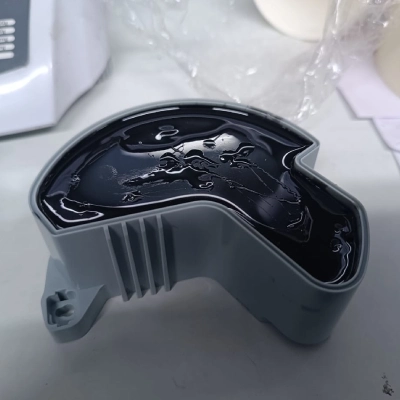
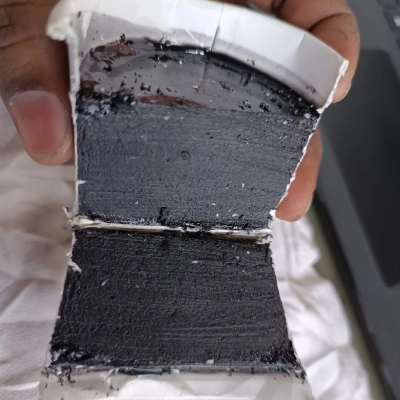
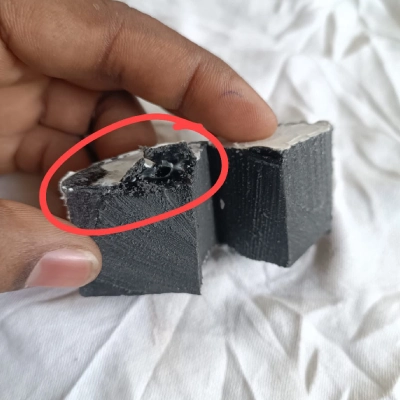
Having the PCB circuits in the casing that do not allow for proper material flow and air escape in potting can lead to incomplete filling and air entrapment. Twin guided the client’s team to check the possibility of adding a runner and a riser for the electronic meters. The component design team had focused on the ease of assembly. But since the potting is at the end of the line, the risk of bubbles arising in potted assemblies was ignored. Design changes with appropriate venting channels to facilitate the escape of air and ensure even distribution of the potting material were necessary. Ensure that your design allows for a smooth flow of the material to reach all parts of the assembly.
2. Insufficient Vacuum Level Rapid Vacuum Release
3. Inadequate Material Degassing
Thoroughly degas the potting material by placing it under vacuum for a sufficient period before use. This process removes any entrapped air and ensures a more uniform and bubble-free application.
4. Dispensing overflow
5. Ignoring Atmospheric Conditions
6. Pre and Post Process Checks
Additional Tips
Training and Documentation
Ensure all personnel involved in the vacuum potting process are adequately trained and that detailed documentation of the process is maintained for consistency and quality control.
Regular Maintenance
Keep vacuum potting equipment well-maintained to avoid unexpected failures and ensure consistent performance.
Choose your machine with our Expert

Sanchita Bhalwankar
Expert in Potting Processes
- +91 99755 49703
- mktg@twinengineers.com